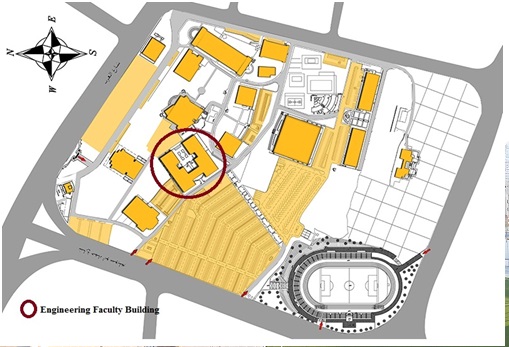

In accordance with the University’s mission and its commitment to continuous improvement of the campus environment and sustainability, the Civil Engineering department established two main environmental projects the past three years that are aimed to control the environmental impacts of the campus and contribute to a national quest for conserving scarce resources. In 2018, a small-scale greywater project started assessing the volumes and quality of greywater from one of the student’s bathrooms in the Engineering building. The project’s main goal was to evaluate the feasibility of installing greywater collection systems to all of the University’s bathrooms for later irrigation usage and to calculate the overall savings in fresh water consumption. A second stage of the greywater project is expected to start by the beginning of the year 2022, where greywater will be collected from all bathrooms within the university buildings for the irrigation purposes.

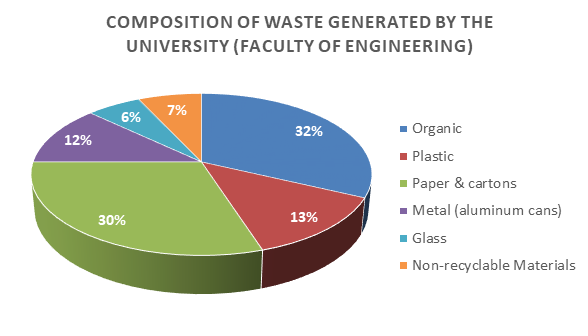
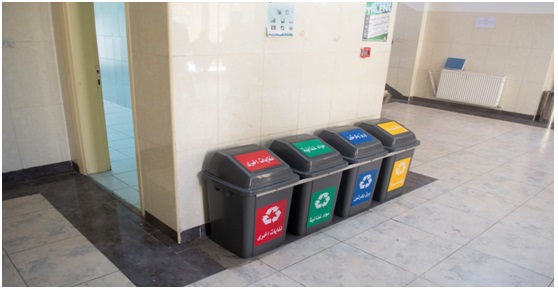
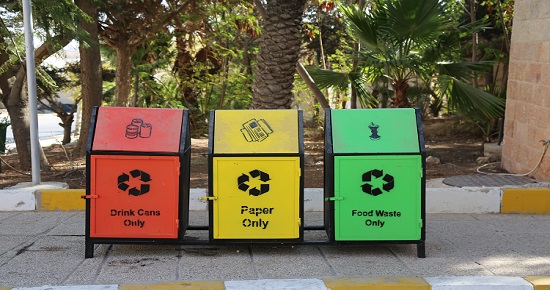
In 2017, a solid waste recycling project started to distribute recycling bins around the Engineering building to regularly measure the diverged volumes of generated waste and assess the efficiency of source separation.


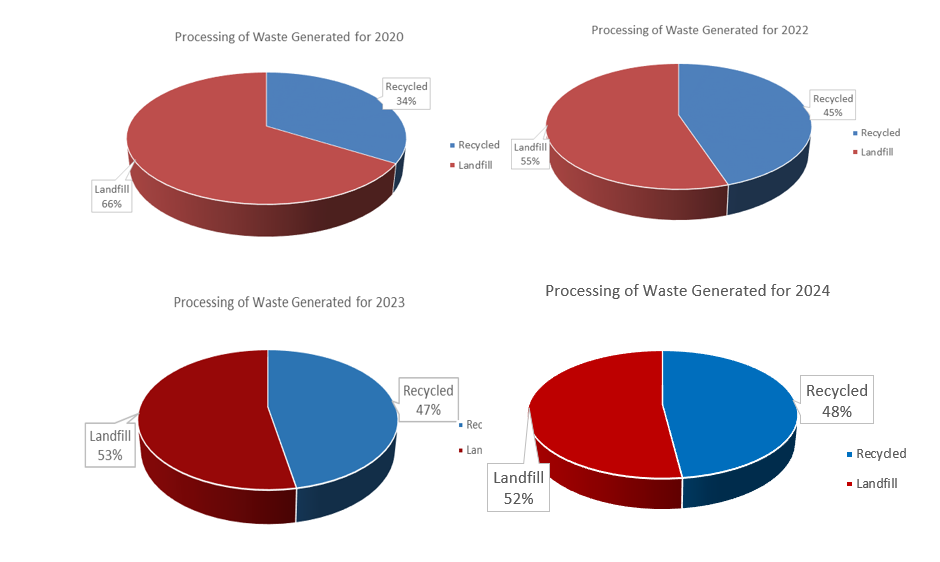
In 2020, the process continued for the first quarter of the year and due to the COVID-19 pandemic and the national shift to online teaching, the volumes of generated, recycled, and landfilled waste dropped to as low as 29.5, 10, and 19.5 mt; respectively.
Certainly, in 2022, there was a noticeable increase in waste volume, leading to a rise in recyclable materials. The university took significant steps towards achieving Sustainable Development Goals by collaborating with companies to recycle paper, cardboard, plastic, wood, and certain metals. Additionally, the university shifted towards using recyclable materials and phasing out non-recyclables, aligning with its commitment to sustainable development goals.
In 2023, the university produced a total of 85 mt of waste, marking an increase from the previous year due to the growing number of students. Of this waste, 47% was recycled, reflecting the university’s commitment to improving recycling rates. This was achieved through the implementation of internal procedures that encourage recycling among students and staff. These efforts demonstrate the institution’s dedication to sustainability and its pursuit of achieving the Sustainable Development Goals (SDGs).
In 2024, the university produced a total of 103 mt of waste, marking an increase from the previous year due to the growing number of students. Of this waste, 48% was recycled, reflecting the university’s commitment to improving recycling rates. This was achieved through the implementation of internal procedures that encourage recycling among students and staff. These efforts demonstrate the institution’s dedication to sustainability and its pursuit of achieving the Sustainable Development Goals (SDGs).